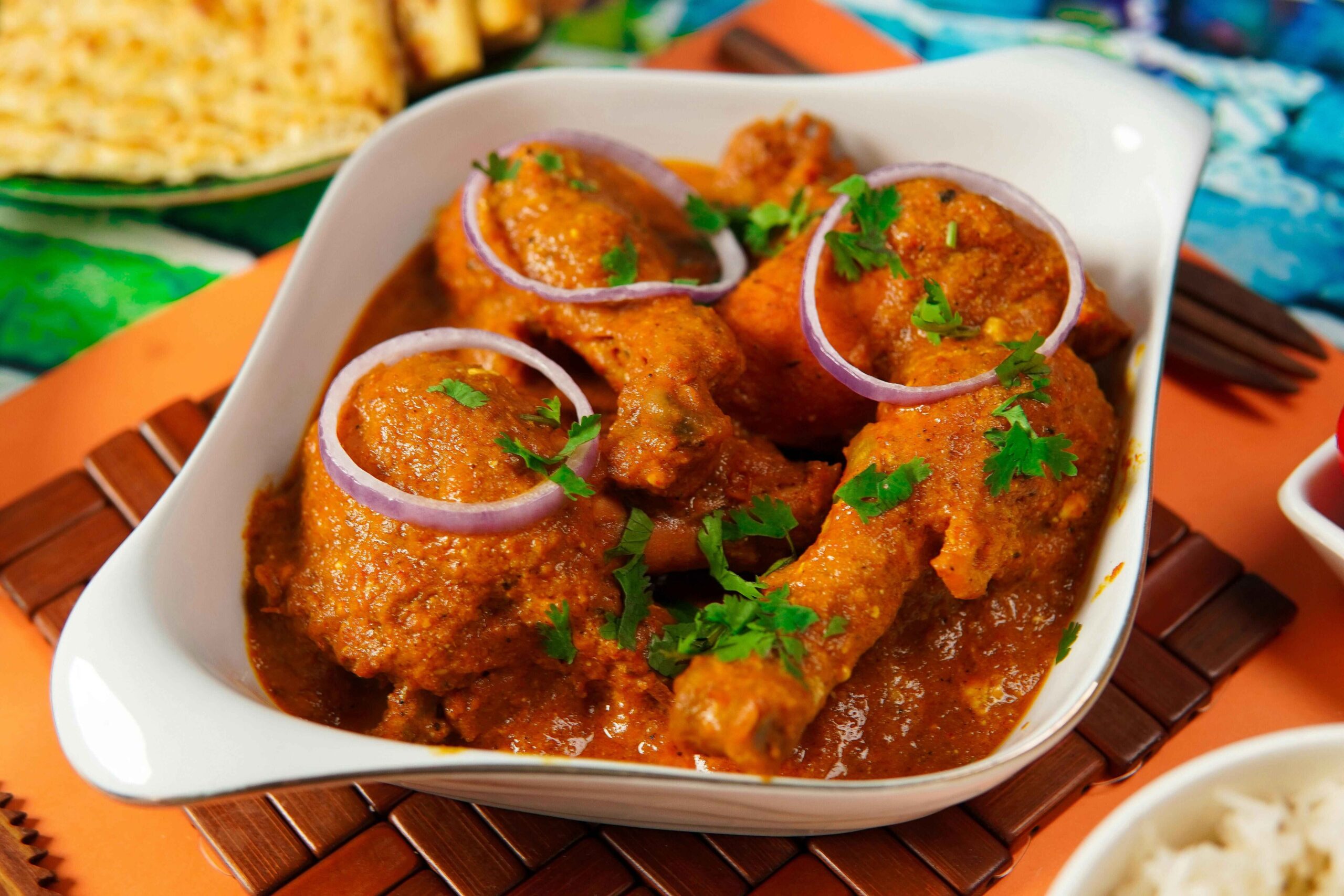
Spicy Pakistani Style Egg Curry Cooking Method
Pakistani cuisine is famous for its rich spices, bold flavors, and comforting homemade dishes. Among the many traditional recipes enjoyed across Pakistan, spicy egg curry holds a special place. It is a flavorful dish made with boiled eggs cooked in a thick, aromatic gravy prepared from onions, tomatoes, and traditional spices. This dish is loved because it is simple to prepare, affordable, and extremely satisfying.
Spicy Pakistani style egg curry is commonly served with roti, naan, or steamed rice, making it a perfect meal for lunch or dinner. The recipe is popular in many households because it combines everyday ingredients with a cooking method that enhances the natural taste of eggs.
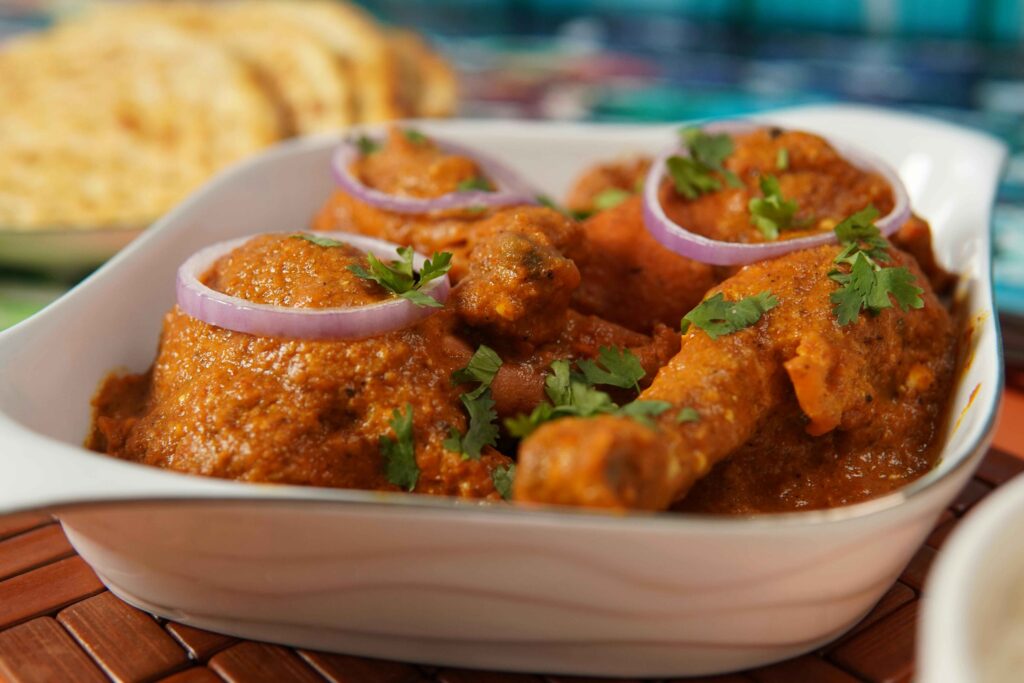
This guide explains the complete cooking method, ingredients, preparation techniques, and helpful tips for making a delicious Pakistani egg curry at home.
Understanding Pakistani Egg Curry
Egg curry is known for its rich, spicy gravy that absorbs the flavor of traditional South Asian spices. Unlike plain boiled eggs, the eggs in this dish are lightly fried or cooked in a flavorful sauce that enhances their taste.
The gravy is usually prepared using:
- Onions
- Tomatoes
- Garlic and ginger
- Red chili powder
- Turmeric
- Coriander powder
- Garam masala
When these ingredients are cooked together, they form a thick sauce that gives egg curry its distinctive flavor and aroma.
In Pakistan, the level of spice can vary depending on personal taste. Some people prefer a mild curry, while others enjoy a more intense spicy version.
Ingredients Required for Spicy Egg Curry
Preparing Pakistani style egg curry does not require complicated ingredients. Most items are easily available in everyday kitchens.
| Ingredient | Quantity | Purpose |
|---|---|---|
| Eggs | 4–6 | Main ingredient |
| Cooking oil | 3 tablespoons | For frying and cooking gravy |
| Onion (finely chopped) | 1 large | Adds sweetness and texture |
| Tomatoes (chopped) | 2 medium | Creates rich gravy |
| Garlic paste | 1 teaspoon | Adds aroma and flavor |
| Ginger paste | 1 teaspoon | Enhances taste |
| Red chili powder | 1 teaspoon | Provides spice |
| Turmeric powder | ½ teaspoon | Adds color and flavor |
| Coriander powder | 1 teaspoon | Traditional spice taste |
| Garam masala | ½ teaspoon | Final aroma |
| Salt | To taste | Balances flavors |
| Fresh coriander leaves | Small handful | Garnishing |
Preparing the Eggs
The first step in making egg curry is boiling the eggs properly.
- Place eggs in a pot and cover them with water.
- Bring the water to a boil over medium heat.
- Allow the eggs to cook for about 8–10 minutes.
- Remove the eggs and place them in cold water.
- Peel the shells carefully.
Many cooks lightly fry the boiled eggs in oil before adding them to the curry. This method gives the eggs a slightly crispy outer layer and improves their flavor.
To do this:
- Heat one tablespoon of oil in a pan.
- Add boiled eggs and fry for 2–3 minutes.
- Remove and keep them aside.
Preparing the Curry Base
The curry base is the most important part of this dish. It is where all the spices combine to create a rich flavor.
Start by heating oil in a cooking pan. Once the oil becomes warm, add chopped onions and cook them until they turn golden brown. This step is important because properly cooked onions give depth to the curry.
After the onions are ready, add garlic and ginger paste. Stir the mixture for about a minute so the aroma spreads throughout the pan.
Next, add chopped tomatoes and cook them slowly until they soften and begin to break down. Tomatoes help form the thick gravy that holds the spices together.
Adding Traditional Spices
Once the tomato mixture becomes soft, it is time to add the spices. Add the following:
- Red chili powder
- Turmeric powder
- Coriander powder
- Salt
Mix the spices thoroughly with the onion and tomato base. Allow the mixture to cook for several minutes so the spices release their natural flavor.
A small amount of water can be added if the mixture becomes too thick. Continue cooking until the oil begins to appear slightly on the surface of the gravy.
Cooking the Eggs in the Curry
Now add the previously boiled eggs to the prepared gravy.
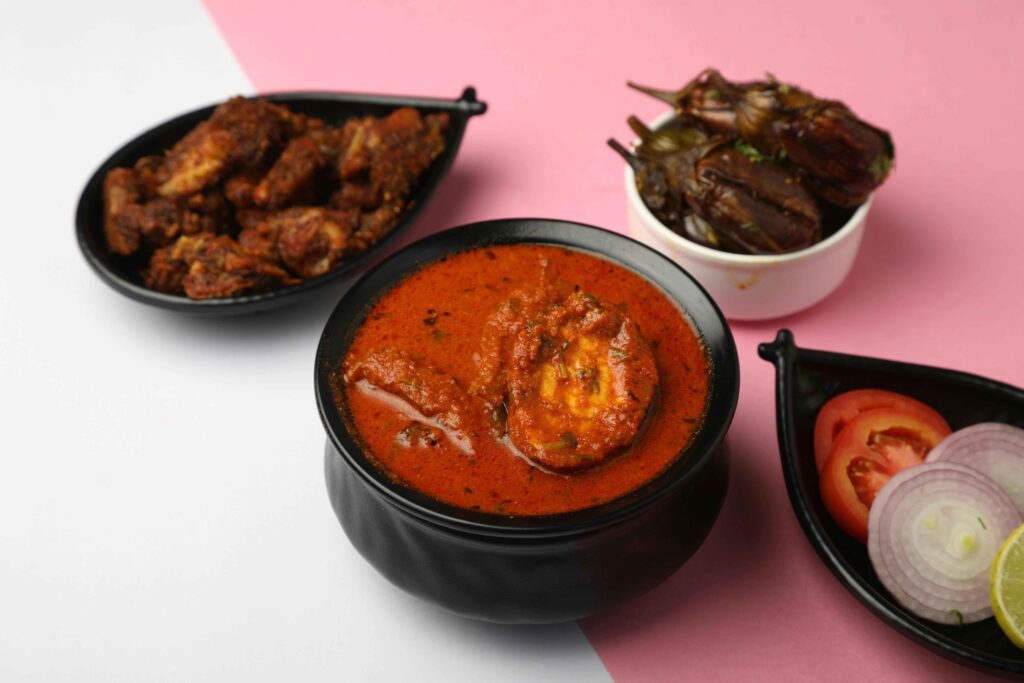
Some people prefer to make small cuts on the eggs before adding them to the curry. This allows the gravy to absorb into the eggs, improving the overall taste.
Carefully place the eggs into the pan and coat them with the curry sauce. Let the dish simmer for 5–7 minutes so the eggs absorb the flavors.
At the final stage, sprinkle garam masala over the curry and mix gently.
Adjusting the Curry Consistency
Egg curry can be prepared in different gravy textures depending on preference.
| Curry Style | Water Amount | Texture |
|---|---|---|
| Thick Curry | Very little water | Rich and concentrated |
| Medium Curry | Moderate water | Balanced gravy |
| Thin Curry | More water | Light and soupy |
For traditional Pakistani meals served with roti, a medium-thick curry is usually preferred.
Serving Suggestions
Spicy Pakistani egg curry is a versatile dish that pairs well with several foods.
Common serving options include:
- Fresh roti or chapati
- Soft naan bread
- Steamed basmati rice
- Paratha
Adding fresh coriander leaves on top of the curry enhances both flavor and presentation.
Some people also serve egg curry with sliced onions, green chilies, and lemon wedges on the side.
Nutritional Benefits of Egg Curry
Eggs are known for their excellent nutritional value. When combined with spices and vegetables, egg curry becomes a balanced meal.
| Nutrient | Benefit |
|---|---|
| Protein | Supports muscle strength |
| Vitamin B12 | Helps energy production |
| Iron | Supports blood health |
| Healthy fats | Provides energy |
| Antioxidants from spices | Supports overall wellness |
Because eggs contain high-quality protein, this dish is often included in many household meal plans.
Cooking Tips for Better Flavor
Small cooking details can significantly improve the final taste of egg curry.
One important tip is slow cooking. Allowing the onion and tomato mixture to cook slowly helps develop a richer flavor.
Another useful tip is to use fresh spices whenever possible. Fresh spices release stronger aromas and improve the overall quality of the dish.
Some cooks also add a small pinch of kasuri methi (dried fenugreek leaves) near the end of cooking. This ingredient adds a slightly smoky flavor that enhances the curry.
Popular Variations of Egg Curry
Across different regions, people prepare egg curry in slightly different styles.
| Variation | Description |
|---|---|
| Tomato Egg Curry | Uses extra tomatoes for tangy flavor |
| Onion Rich Egg Curry | Uses more onions for thicker gravy |
| Creamy Egg Curry | Adds cream or yogurt for smooth texture |
| Green Chili Egg Curry | Uses fresh green chilies for extra spice |
Each variation has its own unique taste while keeping the basic egg curry concept the same.
Storage and Reheating
Egg curry can also be stored and enjoyed later. When kept in an airtight container in the refrigerator, it usually stays fresh for 1–2 days.
When reheating, add a small amount of water to prevent the curry from becoming too thick. Warm the curry slowly over low heat to maintain its flavor and texture.
Spicy Pakistani style egg curry continues to remain a favorite dish in many kitchens because of its rich taste and simple preparation. The combination of boiled eggs with aromatic spices creates a satisfying meal that can be enjoyed with a variety of traditional breads or rice dishes.
Read Our Delicious Recipies: Simple Egg Omelette Recipe for Healthy Breakfast
Conclusion
Spicy Pakistani style egg curry is a comforting and flavorful dish that reflects the rich culinary traditions of Pakistani home cooking. The combination of boiled eggs with a thick, aromatic gravy made from onions, tomatoes, and traditional spices creates a meal that is both satisfying and nourishing. Its bold flavor, warm spices, and simple preparation make it a popular choice in many households.
One of the reasons this dish is widely loved is its versatility. It can be served with soft roti, warm naan, or steamed rice, making it suitable for different meal preferences. The balance of spices gives the curry its signature taste, while the eggs absorb the flavors of the gravy, creating a delicious and hearty dish.
Another advantage of Pakistani egg curry is that it uses everyday kitchen ingredients. With basic spices and a few fresh vegetables, it is possible to prepare a rich and satisfying meal without complicated cooking techniques. This makes it a practical option for regular home cooking while still delivering a traditional taste.
When prepared with care, the dish offers a perfect blend of flavor, aroma, and texture. The slow cooking of onions and tomatoes allows the spices to develop fully, resulting in a curry that is both flavorful and comforting. Fresh coriander added at the end enhances the presentation and adds a refreshing touch.
Spicy Pakistani style egg curry continues to remain a classic dish that brings warmth and flavor to the dining table. Its simple ingredients, rich taste, and traditional cooking method make it a timeless recipe enjoyed by many food lovers.
Frequently Asked Questions (FAQs)
1. What makes Pakistani style egg curry different from other egg curry recipes?
Pakistani style egg curry is known for its bold spices and rich onion-tomato gravy. The use of traditional spices such as red chili powder, turmeric, coriander powder, and garam masala gives the dish a deep and aromatic flavor. The cooking method also focuses on slowly cooking the onion and tomato base to create a thick and flavorful curry.
2. Can egg curry be made less spicy?
Yes, the spice level can easily be adjusted. To make a milder version, reduce the amount of red chili powder and green chilies used in the recipe. You can also add a little yogurt or cream to soften the heat while keeping the flavor balanced.
3. Is it necessary to fry the boiled eggs before adding them to the curry?
Frying the boiled eggs is optional but commonly practiced in many Pakistani kitchens. Lightly frying the eggs in oil gives them a slightly crispy outer layer and enhances their flavor. However, you can also add the boiled eggs directly to the curry if you prefer a simpler method.
4. What is the best way to serve spicy egg curry?
Egg curry is traditionally served with roti, chapati, naan, or steamed basmati rice. Many people also enjoy it with paratha or simple flatbread. Fresh coriander leaves and sliced onions can be added on top to enhance the presentation and taste.
5. How long can egg curry be stored?
Egg curry can usually be stored in the refrigerator for up to two days when kept in an airtight container. When reheating, add a small amount of water and warm it on low heat so the curry maintains its texture and flavor.
6. Can vegetables be added to egg curry?
Yes, some people like to add vegetables such as peas, potatoes, or bell peppers to egg curry. These ingredients can add extra flavor and texture while making the dish more filling.
7. Why does egg curry sometimes taste sour?
Egg curry may taste sour if too many tomatoes are used or if the tomatoes are very acidic. To balance the flavor, you can add a small pinch of sugar or cook the gravy a little longer so the acidity reduces naturally.
8. Which oil is best for cooking egg curry?
Common cooking oils such as vegetable oil, sunflower oil, or mustard oil are often used for egg curry. Each oil gives a slightly different flavor, but all work well with the spices used in Pakistani cooking.
Note: For More Delicious & Tasty Egg Recipies Visit our Website: Recipies Sites